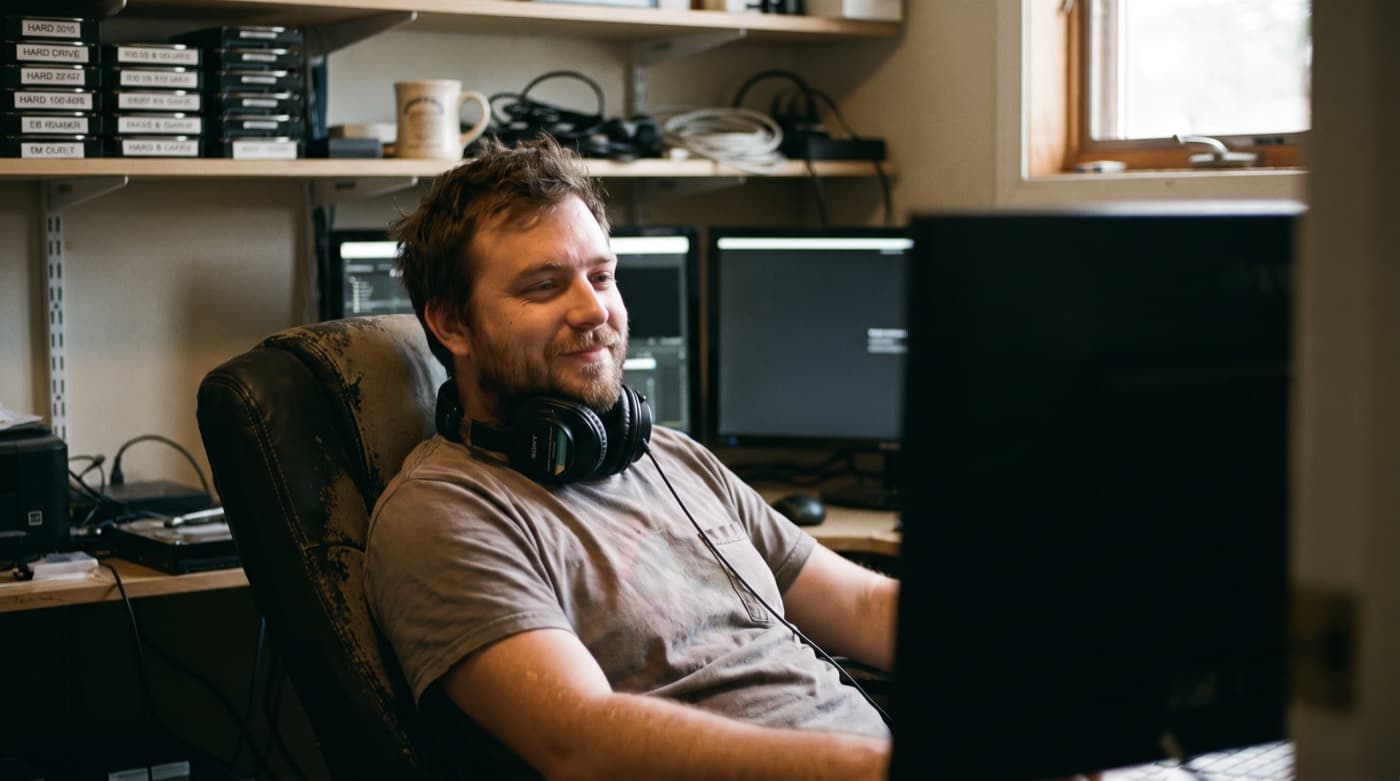
Hybrid filmmaking: traditional craft and applied AI
Keep the craft. Add a controllable AI production layer.

Privileged access
10 video lessons
2 weeks
About 6 hours
What you will learn
- Translate filmmaking language into prompts and production specifications
- Build a seven-part story that gives generated images a reason to exist
- Choose image, video, audio, 3D, editing, and critic tools by production job
- Run a multimodal agent loop with written rules, self-checks, and stop conditions
- Produce tutorials, VFX scenes, micro-dramas, real-footage edits, and motion graphics
- Document rejected takes, costs, rights, and quality checks as part of the final film
Your instructor

Course content
Method step 1, Choose
Choose the video you want to make and understand how to work through the course.
 What You Will Learn
Method step 1, Choose
Learn the craft and the AI tools before planning your production.
 Filmmaking Foundations
 Storytelling That Keeps People Watching
 How AI Video Generation Works
 Choosing the Right AI Tools
Method step 1, Choose
Build a repeatable process for creating, checking, and revising your work.
 The Multimodal Agentic Loop
Method step 1, Choose
Follow the production process for tutorials, micro-dramas, real footage, and motion graphics.
 Creating a Video Tutorial with AI
 Creating a Micro-Drama with Consistent Characters
 Editing Real Footage with AI
 Creating Motion Graphics with AI
Requirements
- A phone or camera and footage you have permission to use
- A computer that can run a browser, ffmpeg, and an editing application
- Access to one agent workspace such as Codex or Claude Code
- Model API access is useful for the hands-on tutorials; exact providers may change
- No prior 3D or programming experience is required
About this course
Hybrid filmmaking starts with the parts of production that models cannot replace: intention, story, framing, performance, sound, rhythm, and taste. The first classes establish that language before any tool is selected.
The second half turns that craft into repeatable AI production systems. You will learn how to write a specification, lock references, generate in passes, keep rejected takes, and use a separate critic to check what the production model cannot reliably judge about itself.
Plan for about 6 hours in total, completed at your own pace over 2 weeks. The ten video lessons include step-by-step cookbooks. Foundations and workflow classes add visual explanations from the presentations, and practical lessons include downloadable skills and project kits.
In their own words
People who took this course
Each clip is one person answering on the day of the class. Press one to hear the whole answer.
This is a good product. You bring value and I support that.
Alice Huang
It makes it easier to cut through the noise.
Carlneil Domkam
This time I really learned a lot.
Cecilia Xia
It is actually almost essential to your workflow.
Patrick Damaso
Certification
Complete the course. Earn your certificate.
Complete every lesson to earn a shareable certificate of completion.
Your course certificate
- Your name
- Your full name.
- The course
- Hybrid filmmaking: traditional craft and applied AI
- Verification
- Verifiable online.
- Completion date
- When you finished.
Common questions
Privileged access has no course fee. Create one account to apply for Hybrid Filmmaking or join the waitlist for another course.
A course completes when your workflow runs live and you have measured it. You record a baseline in module 1, launch the workflow into a working environment, then measure the same thing again. That pairing is what makes the completion record worth sharing.
Hybrid Filmmaking accepts applications for the current intake. The other courses accept waitlist registrations for next month's intake.
Name, role, organization, and a few questions about the workflow you want to improve. It takes about a minute, and it is what lets the guided labs use your own workflow as the project.
One workflow you own, permission to change it, and the tools your team already uses. Applied AI infrastructure fundamentals also assumes a computer you can install software on, hybrid filmmaking assumes a phone or camera, and AI starter for small business runs on everyday business tools. Every course supplies sample data for the labs where your own material is restricted.
A one-page record inside the course. Before you launch, you note a baseline on time, cost, or quality. After you launch, you measure again. The sheet holds both numbers and the difference between them.
Instructor

Roan Weigert
Records all five courses
Hackathon judge and AI content creator, and host of the AI Insights San Francisco podcast. Writes this curriculum and records every core lesson.
Other courses
The other four courses
Each one takes a different kind of work through the same five steps. Pick the one closest to your job.
One permissioned campaign-to-pipeline workflow, built on your own data and measured after launch.
Teaching and learning decisions first, then the policies, data rules and reviews that make them safe to adopt.
The whole picture of an AI system, taught to the depth one real deployment needs.
Two safe AI workflows in daily use within thirty days, with the business result written down.




Apply to join
Start here
Hybrid Filmmaking is accepting applications for its September intake.